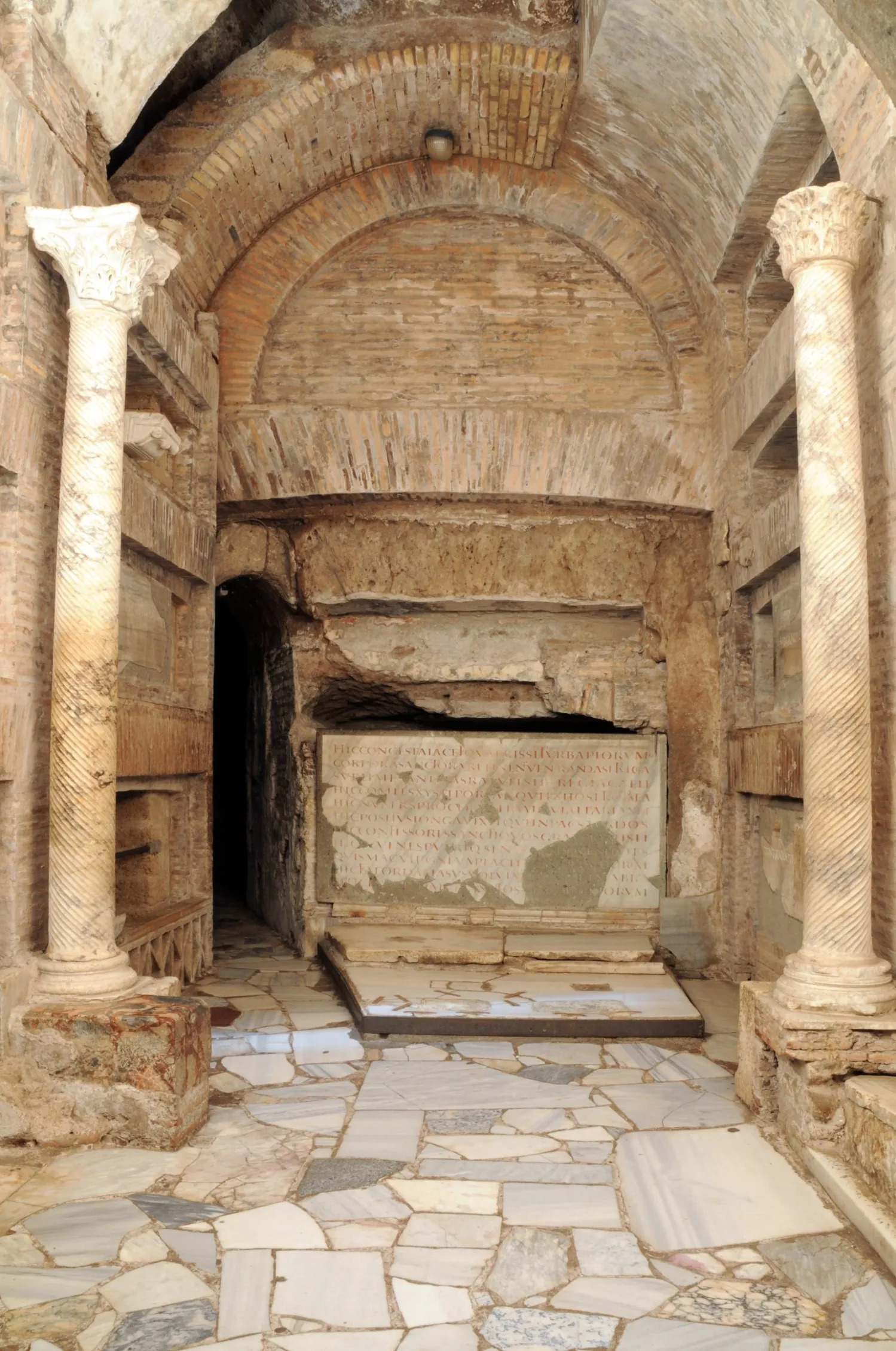
Crypt of the Popes
This central area served as the burial place for several 3rd-century popes and contains original Greek inscriptions.
Look for the memorial plaques along the central wall.
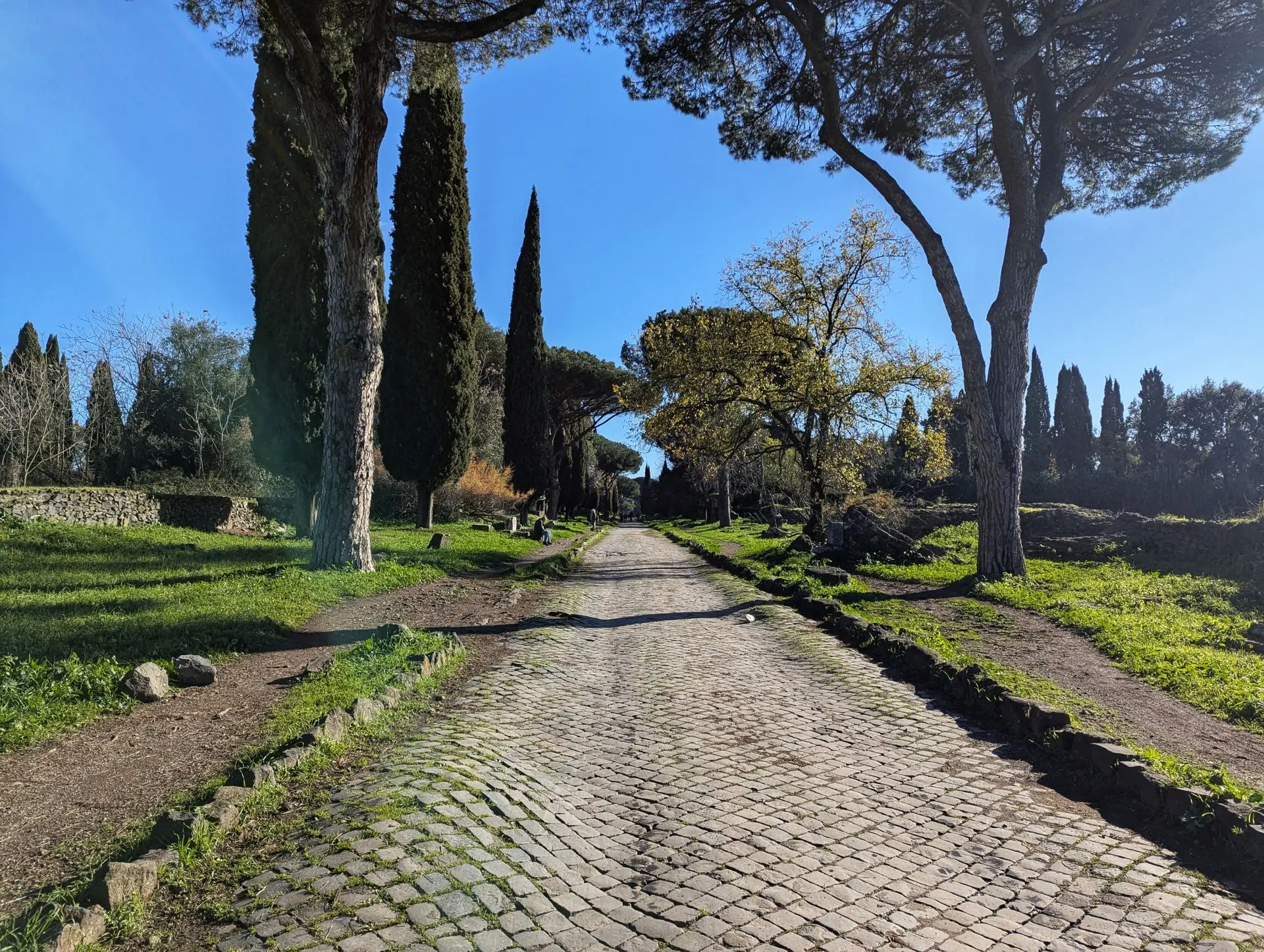
Rome's catacombs form a labyrinth of underground burial tunnels stretching across multiple sites along the ancient Appian Way. Understanding the physical layout and access routes helps visitors plan efficient visits across the scattered network. This guide maps the major complexes and their entry points.
Quick answer
The major Rome catacombs—San Callisto, San Sebastiano, Domitilla, Priscilla, and Sant'Agnese—are spread across different zones, primarily along Via Appia Antica. San Callisto at Via Appia Antica 110 forms the largest complex with over 20 kilometers of tunnels across multiple levels. Each catacomb operates independently with separate entrances, requiring 2-3 kilometers of surface travel between sites. No single underground passage connects the networks.
More than sixty catacomb complexes lie beneath Rome's periphery, though only five admit visitors with regular access. The sprawling underground Christian burial sites developed between the second and fifth centuries as independent networks, never intended as a unified system. Each complex grew organically around donated land parcels, resulting in the scattered geography visitors encounter today. The Via Appia Antica corridor concentrates three major sites within a four-kilometer stretch. San Callisto anchors the central zone with four levels of galleries extending 20 meters below street level, housing an estimated half-million burials. Two kilometers southeast, San Sebastiano preserves both Christian and earlier pagan hypogea, while Domitilla's vast network branches north from Via delle Sette Chiese. The remaining accessible sites—Priscilla near Villa Ada and Sant'Agnese on Via Nomentana—require separate journeys across the city, each demanding dedicated travel time. Underground navigation follows strict guided protocols at every location. Self-guided wandering is prohibited due to tunnel complexity and preservation concerns. The mandatory guided tours at San Callisto trace fixed routes through the Pope's Crypt and Santa Cecilia chamber, covering roughly 800 meters of the network's total length. Humidity and narrow passages dictate single-file movement through tufa-carved corridors barely 80 centimeters wide in sections. Temperature holds constant at 14°C regardless of surface conditions, though air quality diminishes in deeper galleries. Surface orientation requires attention to Via Appia Antica's irregular numbering and sparse signage. San Callisto's entrance at number 110 sits opposite the Jewish catacombs, marked by a modest courtyard rather than prominent street presence. GPS reliability drops near tunnel clusters, and cellular signals fade within 10 meters of descent. Printed maps from official sources prove more dependable than mobile apps for inter-site navigation. The 218 and 660 bus routes serve the Appian corridor, though service frequency drops below hourly after 15:00, complicating multi-site itineraries.
“Each complex grew organically around donated land parcels, resulting in the scattered geography visitors encounter today.”
This itinerary suits visitors joining the mandatory guided tour at the Catacombs of San Callisto. Plan for a 90-minute visit that includes both above-ground briefing and underground exploration.
Reach the entrance on Via Appia Antica, 110 during the morning window to avoid afternoon crowds. Allow 10 minutes for ticket collection and group assembly.
Your guide introduces the site's history and Christian burial practices before descending. This above-ground orientation lasts roughly 10 minutes.
Follow your guide down the original staircase into the first network of galleries. The temperature drops noticeably as you enter the tufa corridors.
Walk through interconnected passages where early popes were buried, noting the loculi niches carved into walls. Your guide controls the route and pace.
Stop at small burial chambers decorated with early Christian symbols and frescoes. Photography restrictions apply in certain zones.
Ascend via the exit staircase, completing the underground circuit. The guided portion concludes here, typically lasting 60–70 minutes total.
The Catacombs of Saint Callixtus feature an extensive subterranean network organized into distinct burial areas and historical chambers. Visitors navigate these galleries to observe early Christian iconography and sacred architecture preserved within the tuff rock.
This central area served as the burial place for several 3rd-century popes and contains original Greek inscriptions.
Look for the memorial plaques along the central wall.
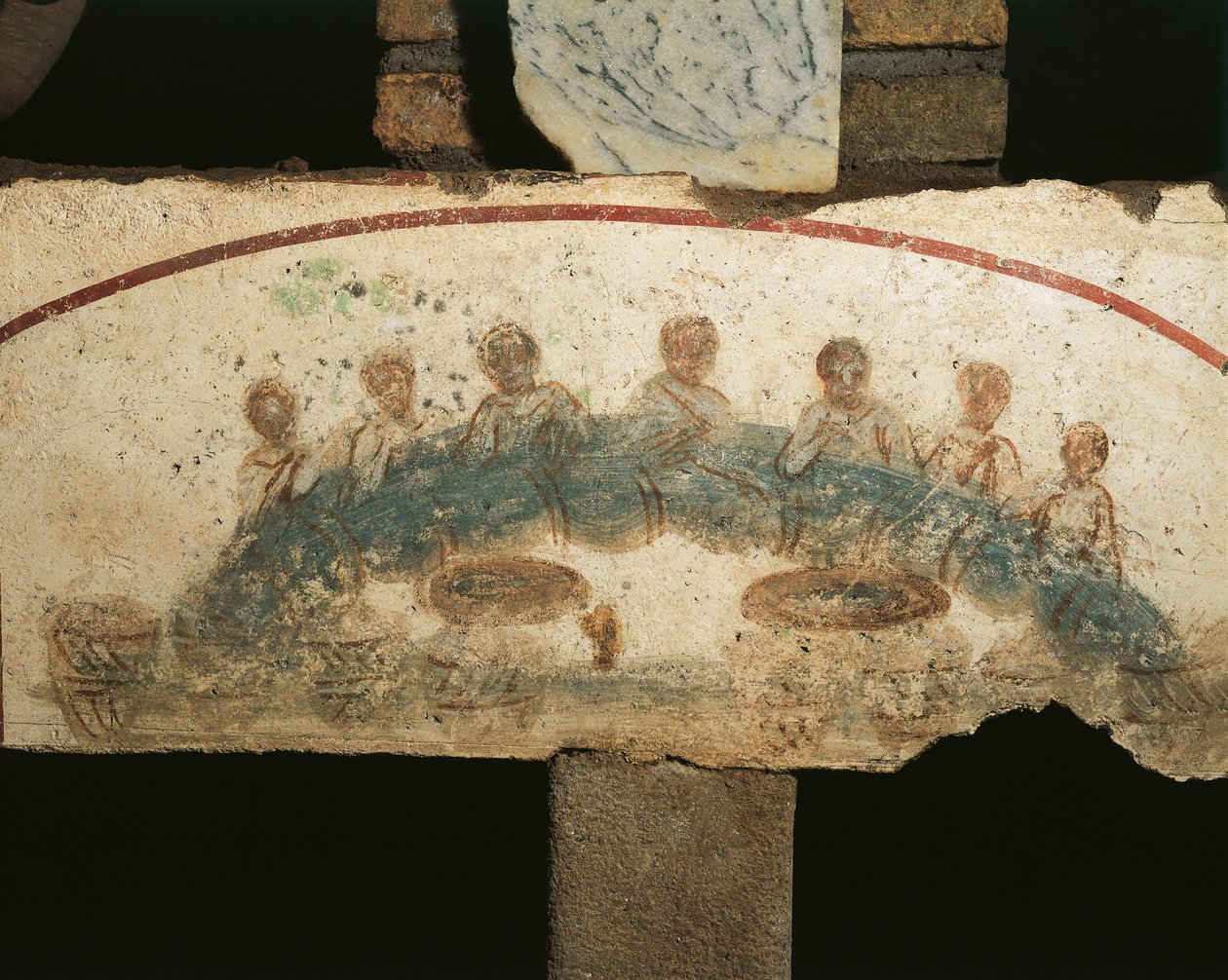
These small funerary chambers are decorated with 3rd-century frescoes depicting baptism and the Eucharist.
Observe the symbolism in the wall paintings carefully.
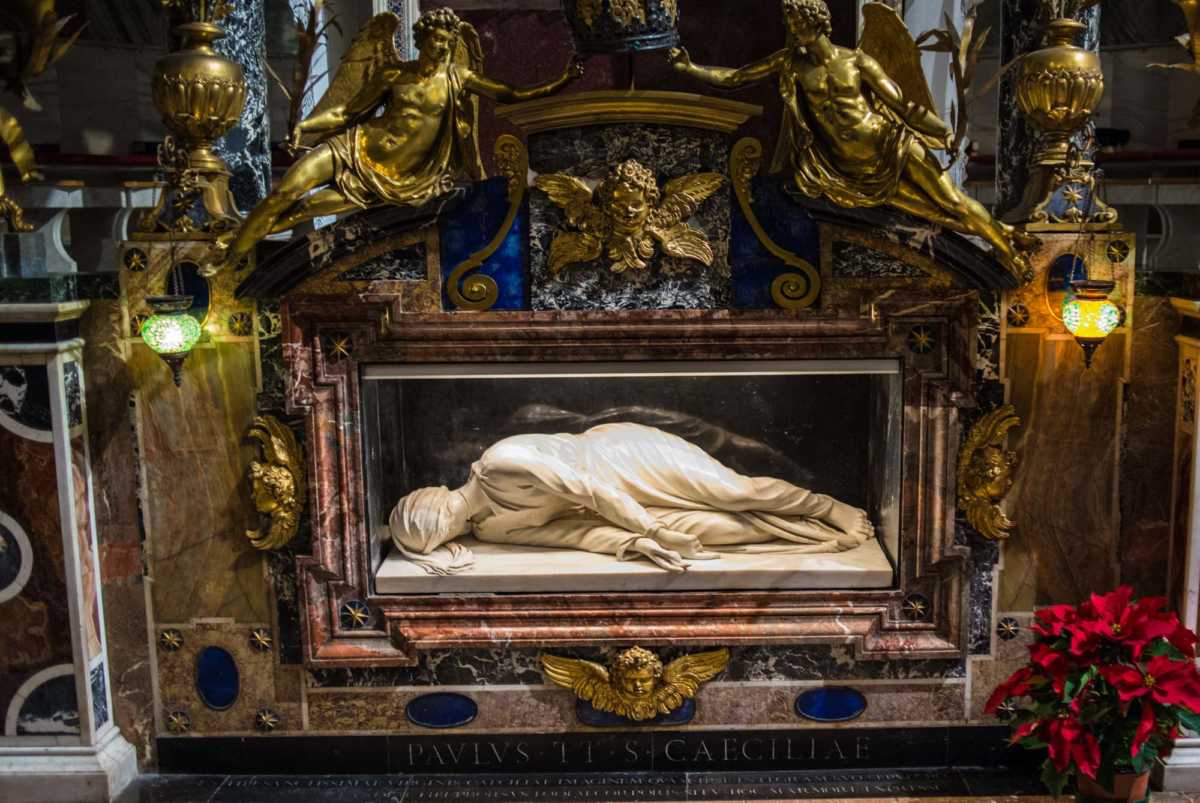
This chamber once held the remains of Saint Cecilia and features remnants of medieval frescoes and a statue.
Note the location of the altar niche.
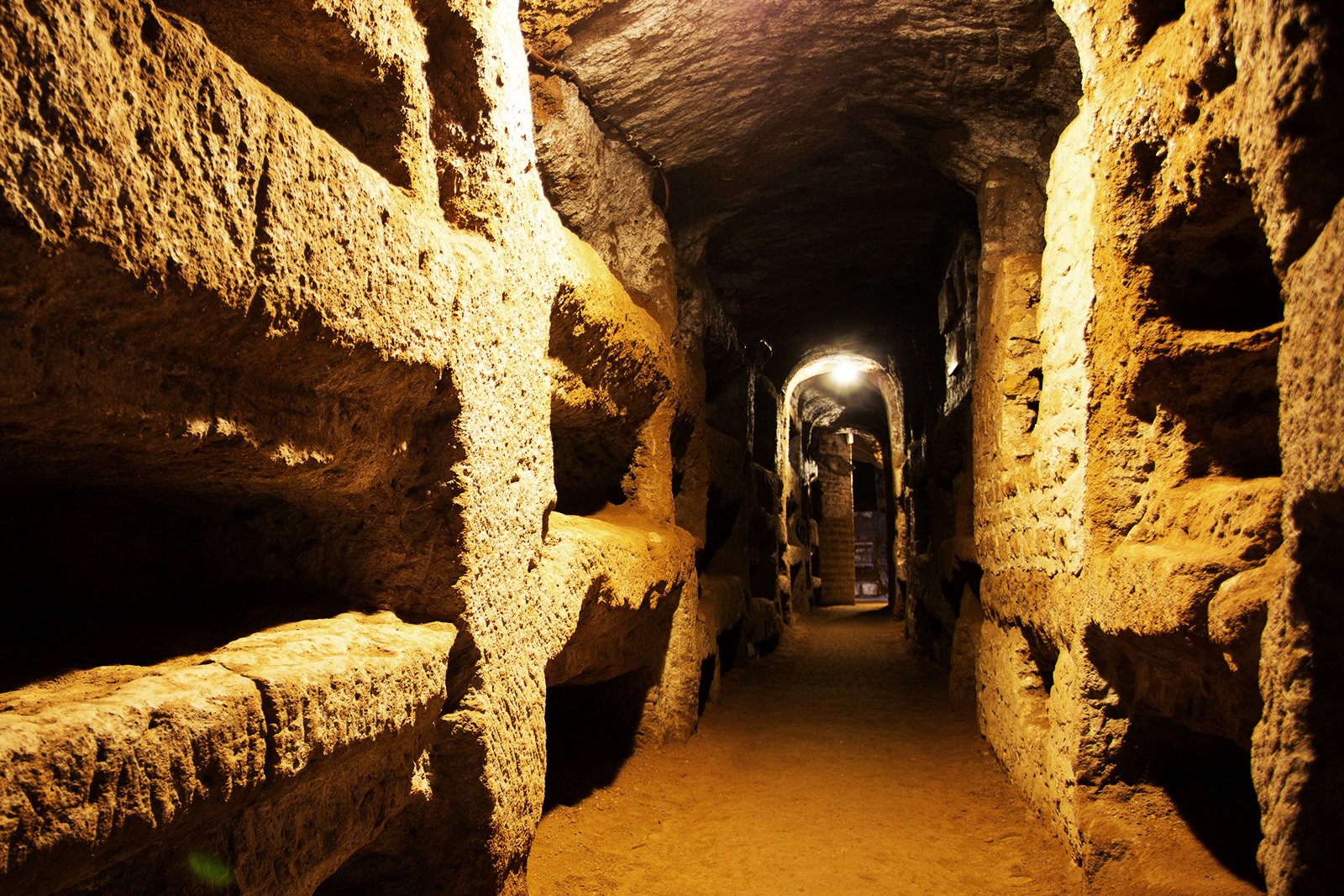
A long corridor lined with multiple tiers of loculi, or burial niches, carved directly into the walls.
Look up to see the depth of the burial levels.
The Catacombs of Rome maintain a consistent weekly schedule, operating daily with a midday pause, except for Wednesdays when the site is closed.
The Catacombs of Saint Callixtus are located at Via Appia Antica, 110, 00179 Roma RM, Italy. The most reliable way to reach this historic site is via public bus transport connecting from the city center.
Line 118 from Colosseo or Circo Massimo to Appia Antica/Domine Quo Vadis
Line 218 from San Giovanni to Fosse Ardeatine
Direct from Rome city center
When arriving by bus, ensure you follow signs for the official entrance at Via Appia Antica, 110; the site is accessible from the main road.
The best arrival window is 09:00–16:00 to avoid mid-day heat and large afternoon tour groups. Planning your visit during these hours ensures a more manageable pace while exploring the underground network.
Mild temperatures of 15°C to 22°C
These shoulder seasons offer the most comfortable climate for walking along the Via Appia Antica. You will encounter fewer peak-season tour groups during these months.
Hot weather above 30°C
Expect significant humidity and larger visitor numbers. Early morning arrivals are essential to stay ahead of the heat and incoming buses.
Cool weather of 5°C to 14°C
Crowds are at their minimum, though outdoor exploration requires layered clothing. The temperature remains constant underground regardless of exterior conditions.
Verdict: Tuesday to Thursday, arriving at 09:00, during the months of April or October provides the most favorable balance of crowd control and weather.
Everything you need to know about rome catacombs map
Visitors do not receive a physical paper map upon entry as the site is accessible only via guided tours. Professional guides lead all groups through the subterranean galleries, ensuring you stay on the correct path.
Navigating the site requires following your assigned guide who manages the flow through the historic crypts and corridors. The layout of these ancient Roman burial chambers is complex and restricted to designated walkways.
Yes, all visits to this historic site include a mandatory guided tour as part of your admission. These experts provide historical context while safely escorting you through the subterranean levels.
No, independent exploration is not permitted to preserve the integrity of the site and ensure visitor safety. You must remain with your guided tour group at all times while exploring the tunnels.
A rome catacombs map is best used for pre-visit orientation to understand where the site is located along the Appian Way. Once you arrive, your guide will dictate the specific itinerary through the ancient underground galleries.
Children are welcome to visit, though the narrow, uneven paths of these Christian cemeteries can be challenging for strollers. Parents should prepare for an environment that is dark, cool, and requires walking on soft, sometimes uneven ground.
While you may find digital illustrations or a rome catacombs map on the official website, these are intended for educational reference rather than self-guided navigation. Focus on identifying the entrance location at Via Appia Antica for your travel planning.
When reviewing a rome catacombs map, prioritize finding the main entrance and identifying the nearby bus stops for easy access. Keep in mind that the site remains a sacred place of memorial, so maintain a respectful pace throughout the tour.
Guided Rome Catacombs Tours
Read more GuideSan Callisto Catacombs
Read more Tickets & toursCatacombs and Capuchin Crypts
Read more GuideCatacombs of Priscilla
Read more GuideRome Catacombs Visitor Guide
Read more Tickets & toursRome Catacombs Tickets
Read more Tickets & toursRome Catacombs Night Tours
Read more Tickets & toursPrivate Catacombs Tours
Read more